Tag: self-improvement

  • 13 Virtues

    13 Virtues

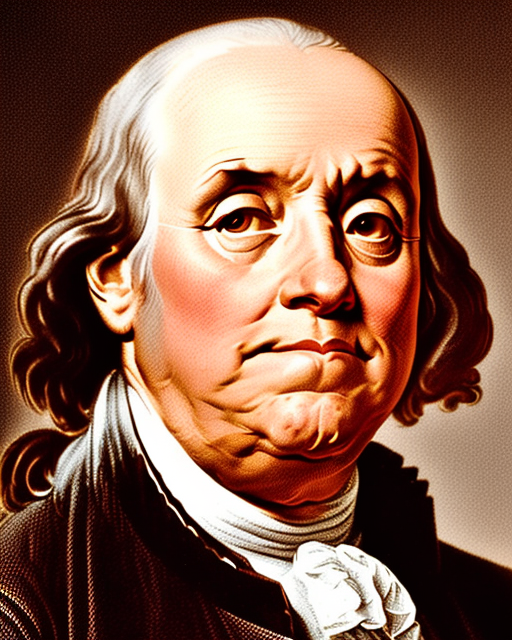
    Benjamin Franklin, one of the Founding Fathers of the United States, developed a system of thirteen virtues that he believed were important for personal growth and self-improvement. His thirteen virtues are:

    1. Temperance – eat not to dullness; drink not to elevation
    2. Silence – speak not but what may benefit others or yourself; avoid trifling conversation
    3. Order – let all your things have their places; let each part of your business have its time
    4. Resolution – resolve to perform what you ought; perform without fail what you resolve
    5. Frugality – make no expense but to do good to others or yourself; i.e., waste nothing
    6. Industry – lose no time; be always employed in something useful; cut off all unnecessary actions
    7. Sincerity – use no hurtful deceit; think innocently and justly; and, if you speak, speak accordingly
    8. Justice – wrong none by doing injuries, or omitting the benefits that are your duty
    9. Moderation – avoid extremes; forbear resenting injuries so much as you think they deserve
    10. Cleanliness – tolerate no uncleanliness in body, clothes, or habitation
    11. Tranquility – be not disturbed at trifles, or at accidents common or unavoidable
    12. Chastity – rarely use venery but for health or offspring, never to dullness, weakness, or the injury of your own or another’s peace or reputation
    13. Humility – imitate Jesus and Socrates

    Franklin strove to implement these virtues into his life by focusing on one virtue per week and tracking his progress each day. He kept a record of each time he violated one of the virtues and worked to correct his behavior. He believed that by focusing on these virtues, he could become a better person and contribute to society in a more meaningful way.

    Throughout his life, Franklin remained committed to these virtues and worked to instill them in others. He believed that personal responsibility and self-improvement were key to creating a better society, and he sought to model these values through his own behavior. Today, Franklin’s thirteen virtues remain an enduring example of the power of self-discipline and personal growth.

    I’ve met numerous people that have heard of Franklin’s 13 virtues. I’ve met only a handful of people that have actually ever tried to instill them into their lives. I’ve met many people that seek to improve their life in some way, but ever fewer that have a road map and a means to track their progress.

    What positive steps have you implemented into your life to improve your life? What virtues or character traits would you like to improve in yourself?

  • Hurry Up And Wait

    Hurry Up And Wait

    (I heard the phrase “Hurry up and wait” a lot last week. Last week I worked three nights filming as a background extra for Hawaii Five-0. 12 hours, 8 hours, and 13 hours. After all that, you won’t see me at all in that episode. I never even made it to the set for the last 13-hour shift. I was just waiting in actor holding, in costume, on stand-by in case they needed me)

    This may come as a shock, but I am not an expert on everything I write about. When you write a book, there comes along with it the perception of expertise, of mastery, of wisdom. But the fact is I (and most authors) are human; and as humans we are imperfect.

    I write about being productive with time, but there are times when I am lazy. I write about taking action immediately, but there are times when I procrastinate. In fact, I used to be an expert at procrastination. Now there is something I could write a book about, but (you know what, insert your own punchline here…).

    Today, I thought I’d write on a subject that I am an expert in, and that is: Patience.

    Patience has always been one of my strengths; probably because of my quasi-Zen philosophical upbringing and the fact that I don’t have children yet. But I never thought of patience as being something of any particular value until later in life.

    1. Patience keeps us focused on the present. We are only impatient because we want something to happen that hasn’t happened yet. The promotion, the traffic light, the bag of popcorn in the microwave. Just realize, that what you are waiting for is going to happen, and very rarely can we do anything to speed up the process. Being anxious or worrying about it will not affect the future, but it will hurt us in the present.

    Since worrying about your promotion will not help you, just focus on performing your work right now with excellence and enthusiasm. Let the promotion take care of itself. Since swearing at the red light will not help you get to your destination any faster, why not enjoy the song currently playing on the radio? Since standing next to the microwave staring at it will not make the popcorn pop faster… Actually, that’s a bad example since microwave popcorn requires your attention so you can stop it before it burns. Don’t sweat over your burrito though.

    Don’t try to pull the future to you faster.

    2. Patience helps provide emotional stability. When we are impatient, we have shorter tempers, we are stressed, we fret. When we are patient, it doesn’t mean that we don’t care about things, just that we have the fortitude to wait. (“Patience is passion tamed.” Lyman Abbott).

    Patience eliminates a great deal of stress, which in turn allows the patient person to maintain calm and balance even under stressful circumstances. Just recognize that time will eventually overcome a current problem or hardship. Now, I am not advocating inactivity or passivity. Just realize that all we can do, is all we can do; and once we do all we can do, the rest requires patience.

    3. Patience helps to nurture growth. John Maxwell, expert on leadership and personal growth writes that “Leaders develop daily, not in a day.” The mentality of growth by lottery, or sudden inspiration, or through instantaneous quantum leap transformation is a myth not a reality.

    To grow mentally, physically or spiritually, requires consistent and persistent activity compounded over time. Impatient people want the results now and maybe they will promise to do the work later. But unfortunately life does not work that way. Patient people recognize the need to put the work in now and reap the results later. This allows them to focus on the immediate work; the process rather than the results.

    Those are my thoughts on patience.

    “But I never got around to it!” That was the punchline for that sentence. Scroll back up if you don’t remember what I was talking about. Sorry, I couldn’t wait…

  • 99% Committed = 100% Uncommitted

    99% Committed = 100% Uncommitted

    (This is an old blog post from 2012. Maybe I just got tired of writing in full paragraphs and decided to make a blog composed entirely of bullet points. And this was years before I got on Twitter.)

    Until one is committed, there is hesitancy, the chance to draw back, always ineffectiveness. Concerning all acts of initiative and creation, there is one elementary truth the ignorance of which kills countless ideas and splendid plans: that the moment one definitely commits oneself, then providence moves too. All sorts of things occur to help one that would never otherwise have occurred. A whole stream of events issues from the decision, raising in one’s favor all manner of unforeseen incidents, meetings and material assistance which no man could have dreamed would have come his way. Johann Wolfgang Von Goethe

    Some thoughts on commitment:

    • Commitment creates time. There is no such thing as a lack of time, only a lack of commitment. Anything that we are committed to we will make time for, period.
    • Commit to something worthwhile. Most of us spend time on activities that no one will care about in a few years. You will probably not care about it in ten to fifteen years.
    • Commit to completion. If you are committed to a task or project, you don’t worry about the timeline. You will get it done. You will stay at the task and complete it.
    • Commit to excellence. When you commit to something, you give it your best effort. Leave it on the field. Throw your heart over the bar. You will succeed or die trying.
    • Commitment is all or nothing. If you are 99% committed to something you are 100% uncommitted. How great would your marriage be if you were 99% committed to your wife? Three days a year of infidelity should be enough to get your wife to leave you.

    What in your life are you committed to?