Tag: blog

  • Failure Is Not An Option, It Is A Necessity

    Failure Is Not An Option, It Is A Necessity

    Everybody fails from time to time. Anyone that has never failed at something has probably never accomplished anything worthwhile. Nearly every mental or physical activity you have ever performed in your life, you failed at it the first time you tried it (except for those things performed automatically by your nervous system). But somehow, when we reach a certain age we become self-conscious and start to view failure as a bad thing.

    Failure is not a bad thing, our reaction to the failure is what is important. If we allow embarrassment to overshadow our desire to achieve, then a few early failures will derail whatever you are attempting; whether it is algebra, skiing, or asking a girl to the prom. Nobody likes failing, falling or rejection. But you will live a happier more fulfilled life if you retake that quiz, go back up that slope, and ask another girl out. As long as we maintain the idea that a single failure is a normal part of life, we just view them the same way we view bumps in the road. When you hit a bump, you keep driving. You don’t get out of your car and yell at the bump in the road, and berate yourself for hitting the bump, then blame the bump on your future problems.

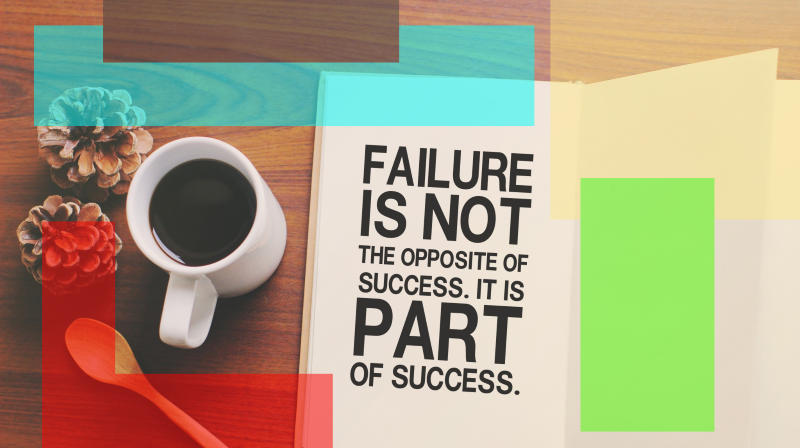
    Winston Churchill said, “Success is the ability to go from one failure to another with no loss of enthusiasm.” Understand this, the opposite of success is not failure, the opposite of success is quitting.

    Quitting also becomes a habit. And when we develop a habit of quitting when things get hard, eventually we stop trying altogether. So we try fewer and fewer new things. We stay in familiar territory, we stay comfortable, we stop growing and we start stagnating. “A man can fail many times, but he isn’t a failure till he gives up.”

    Try to fail at something this week.

  • Trick Question: Quality or Quantity?

    Trick Question: Quality or Quantity?

    In high school I wrote a report on Stephen King. Two actually, for my junior and senior year English classes. (Well, one really, and a later “revised edition”). Whether you like or dislike Stephen King as a writer, you cannot deny that he is successful. During my research I read about King’s work habit in an interview. He would write for 8 hours every day, 362 days a year (he took off only three days). On average, he would produce ten pages of work every day, producing a book and a half a year. Take a look at his biography, to see the list of awards, movies, and novels with his name attached.

    One more quick story. An art professor teaching a ceramics class divided the class into two groups. Group A, would have their grade based on the total number of pottery pieces they completed during the semester. Group B, would have their grade based on only a single final masterpiece that they had the entire semester to complete. Group A jumped in, churning out ceramics as fast as possible. Group B, planned, studied, strategized then finally towards the end of the semester, built their prize work. And at the end of the semester all the best pieces in the class came out of Group A.

    Even though Group A had no grade incentive to actually produce anything of quality.

    Quality comes out of quantity. As Ernest Hemmingway once said, “The first draft of anything is (excrement).” The first group of students developed the most skill and the best quality work because they spent the most time working. Stephen King, especially early in his career probably wrote a lot of work that he threw away in disgust, but he kept going consistently and persistently. (And fortunately his wife, Tabitha, pulled the first dozen or so pages of Carrie out of his wastebasket).

    Here is my three step process to producing quality work.

    1. Start. Do not wait for inspiration or motivation. Roll up your sleeves and work.
    2. Keep Going.
    3. Go to Step 2.

    Then here are two sub-steps to help guide the process, but I wouldn’t add them in until at least 21 days have passed and you have developed a work habit of some sort. Also, these are always in addition to Step 2 and Step 3, never instead of them.

    4. Review your work. Make sure you are progressing in the direction you want.
    5. Seek Advice. From qualified people.

    That’s my five step process to producing quality work. I know I like to keep things simple, but is that too simple? Would you add another step?

  • Why I Love Superheroes

    Why I Love Superheroes

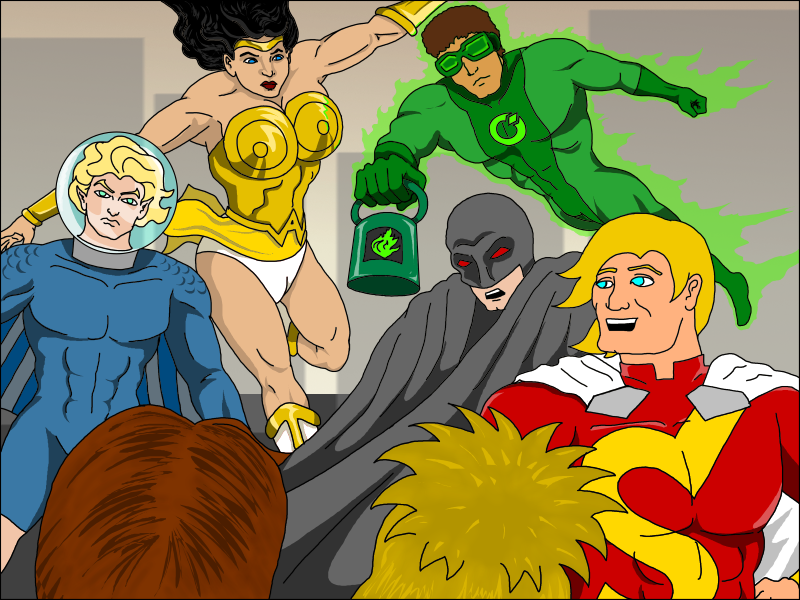
    I readily admit that I am something of a nerd. I love comic book superheroes. I loved them before the relatively recent flood of actual good superhero movies. I was a nerd, before it was cool to be a nerd (and I’m not sure if that makes me more cool, or more nerdy).

    I finally figured out the reason why I love superheroes, and why I would like to be one. It wasn’t that I wanted to fly, be super strong or shoot lasers from my eyes (although that would be cool). The first reason, is because when I see an injustice I would like to have the power to do something about it. That’s why I wanted to take Karate lessons when I was a kid, so I could protect people from bullies. Well, and protect myself; remember: nerd. Even today, if I saw someone get attacked I would probably (and stupidly) put myself into harm’s way.

    But also, superheroes inspire other people. The best scene in Spider-Man 2 was when our hero stops that runaway train from crashing and that car full of passengers see that he’s just a kid under the mask. When Doc Ock returns to capture him, all those people who were previously defenseless passengers stand up against the super-villain. Of course, they prove about as effective as me with my purple belt in the 5th grade, but still it was an inspiring scene.

    Now watch as I make a smooth transition…

    In my first book, I wrote a section on the power of words. Words have power. A few spoken words can bless or haunt your children for the rest of their lives. The words you use can be positive or negative. Words can spread love or hate. Words have the power to create and destroy. You can speak words of life or you can speak words of death. And in this Information Age, words spread with greater speed and force than ever before. Everyone has the potential for incredible power today.

    That’s why I try to be responsible with my choice of words, because I want to use what power I have to uplift and inspire people. Remember, “with great power comes great responsibility.”